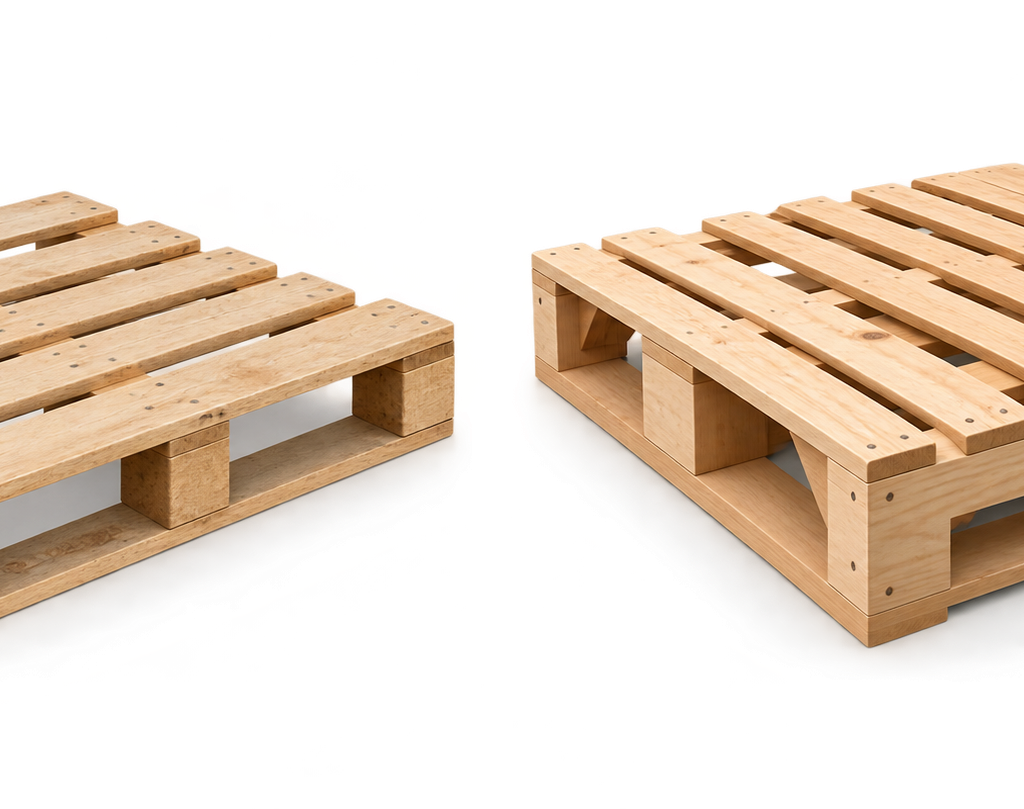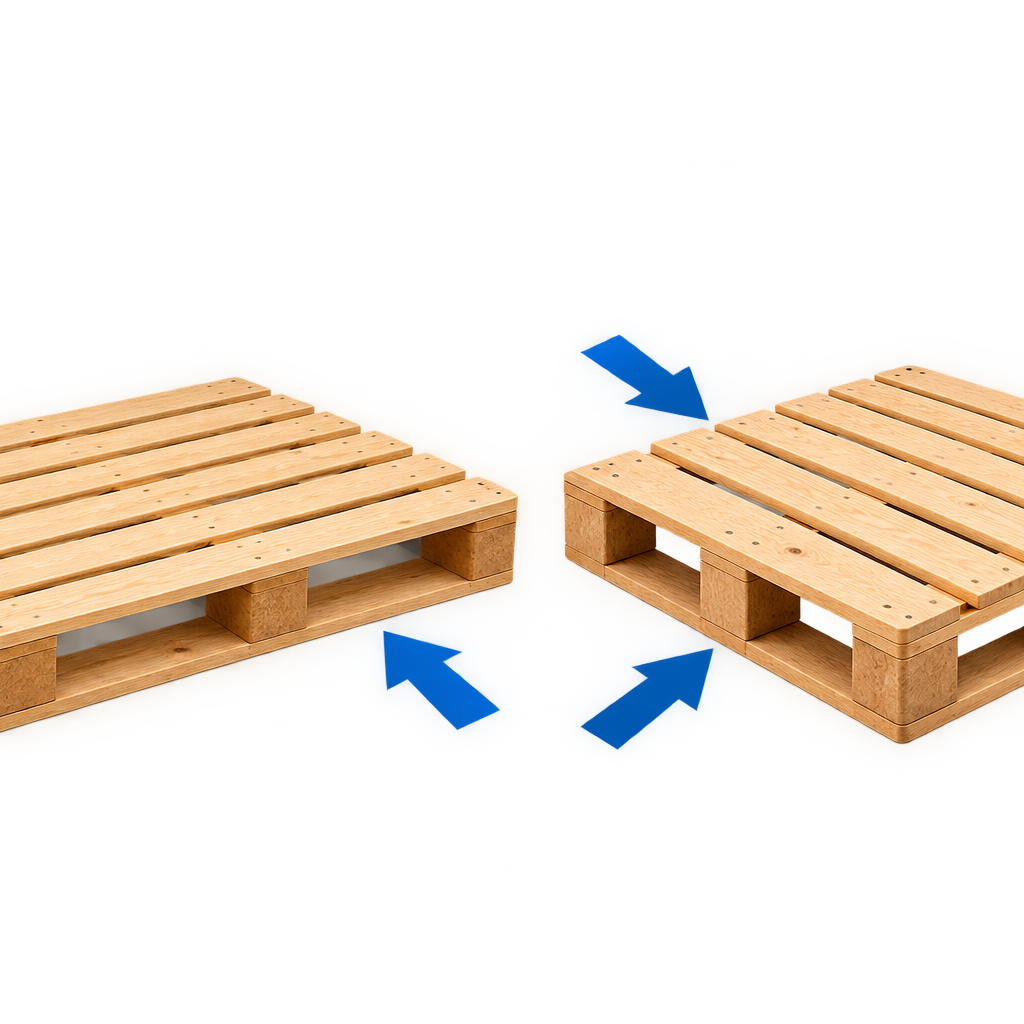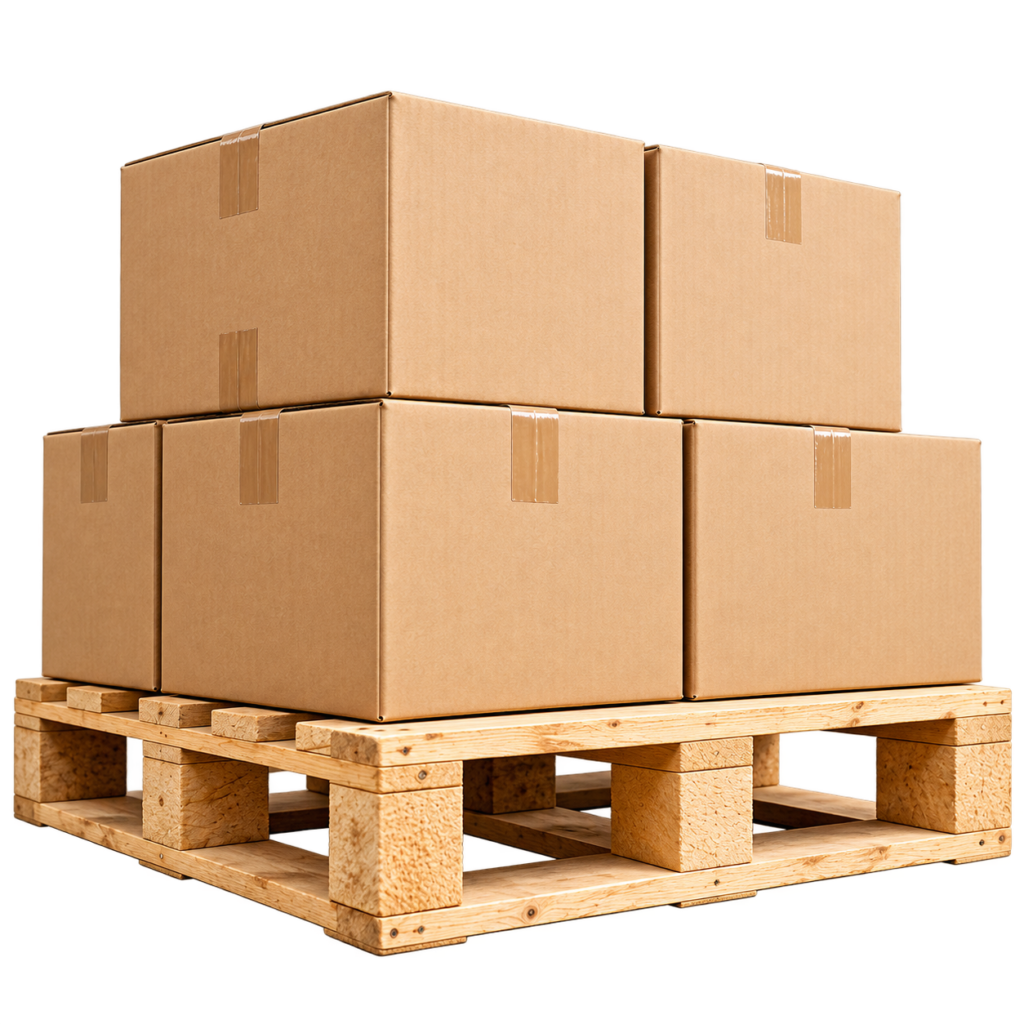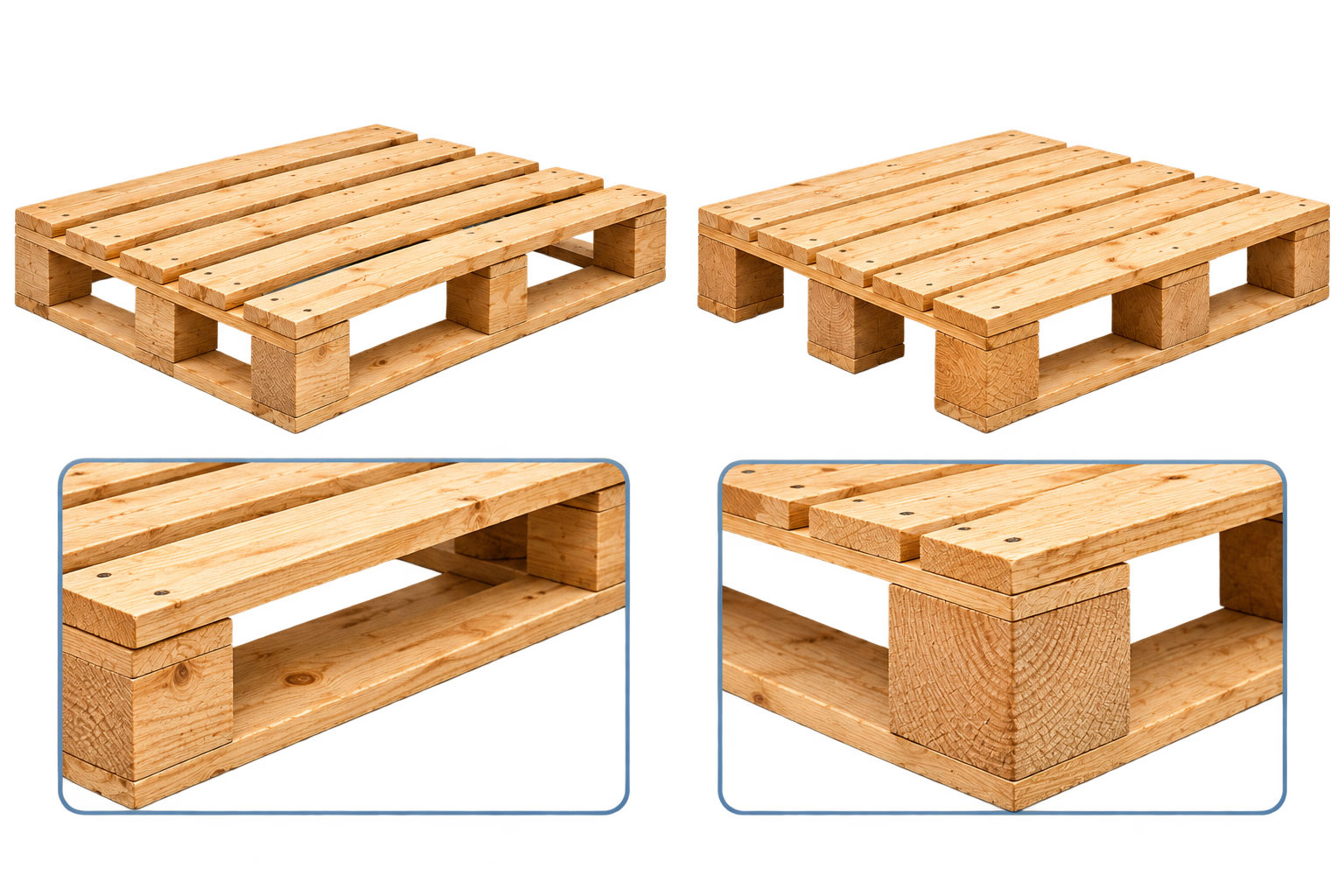
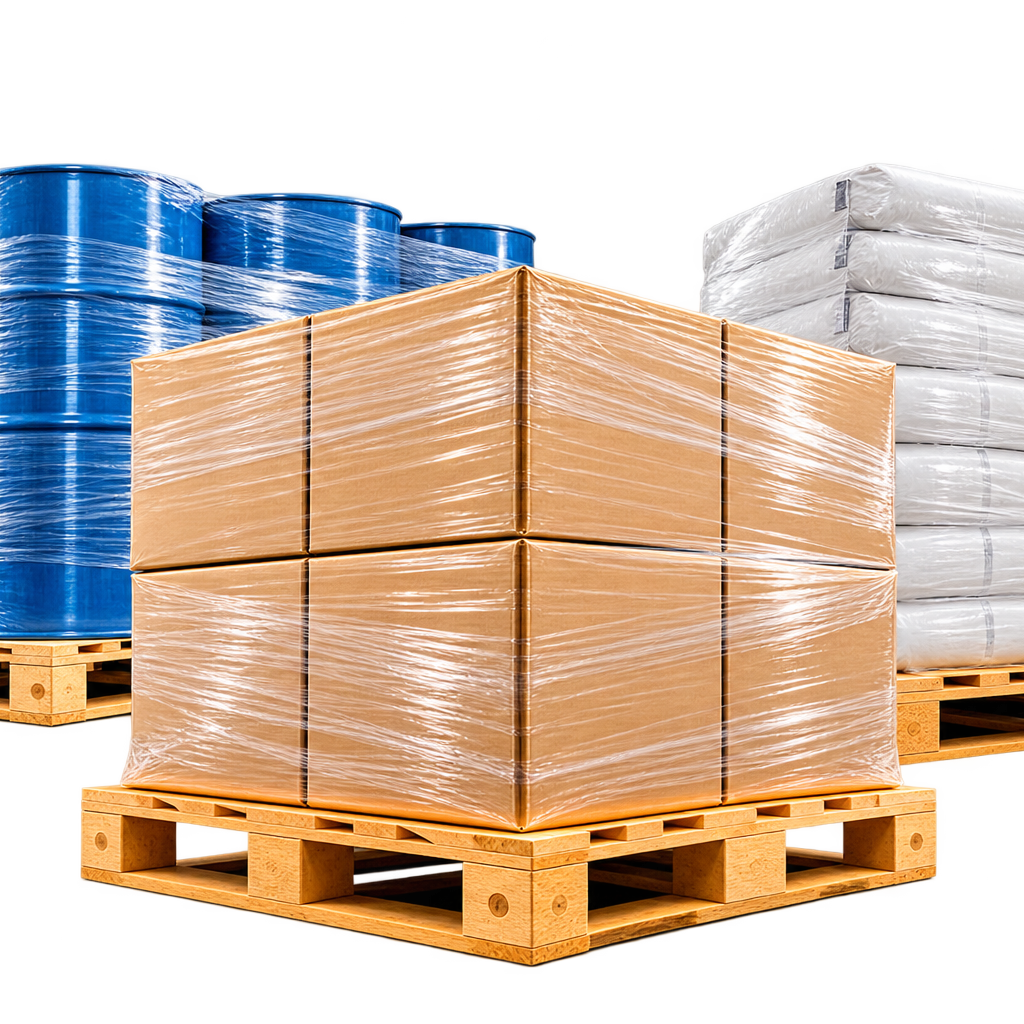
Wood pallets are an essential part of many manufacturing, warehousing, distribution, and shipping operations.
They provide a stable platform for moving, storing, and transporting products using forklifts, pallet jacks, conveyors, and other material-handling equipment.
From the production floor to the distribution center, pallets help businesses move products through the supply chain.
How Are Wooden Pallets Used in Manufacturing?
Manufacturers often use pallets to move raw materials, components, finished products, and packaged goods.
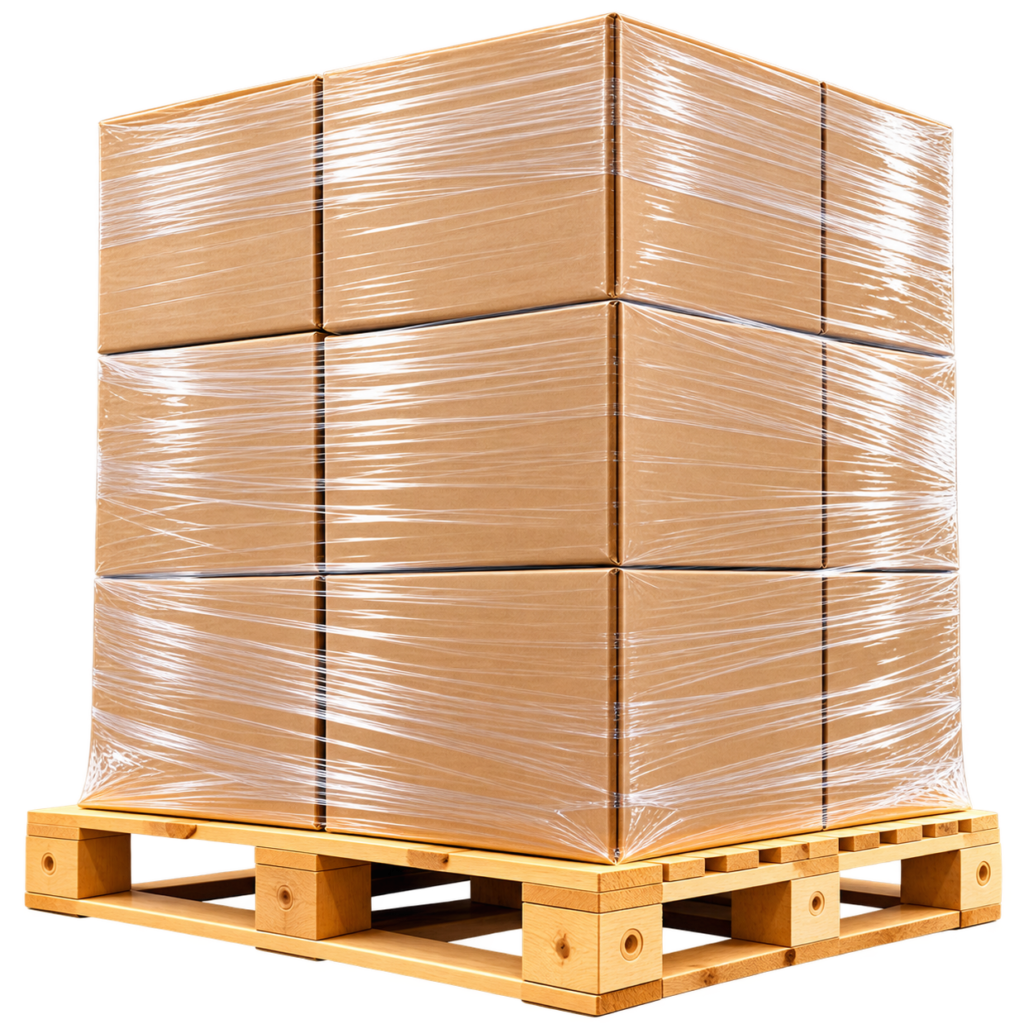
A pallet can create a standardized unit load that can be moved more efficiently using material-handling equipment.
Common manufacturing applications include:
- Moving raw materials
- Storing finished products
- Transporting components
- Preparing products for shipment
- Moving products between production areas
- Loading products onto trucks
Pallets in Warehouse Storage
Warehouses use pallets to organize products and make them easier to move.
Depending on the facility, palletized products may be stored:
- On warehouse floors
- In pallet racking
- In staging areas
- Near loading docks
- In distribution areas
The pallet needs to be compatible with the warehouse’s storage and handling systems.
Pallets and Forklifts
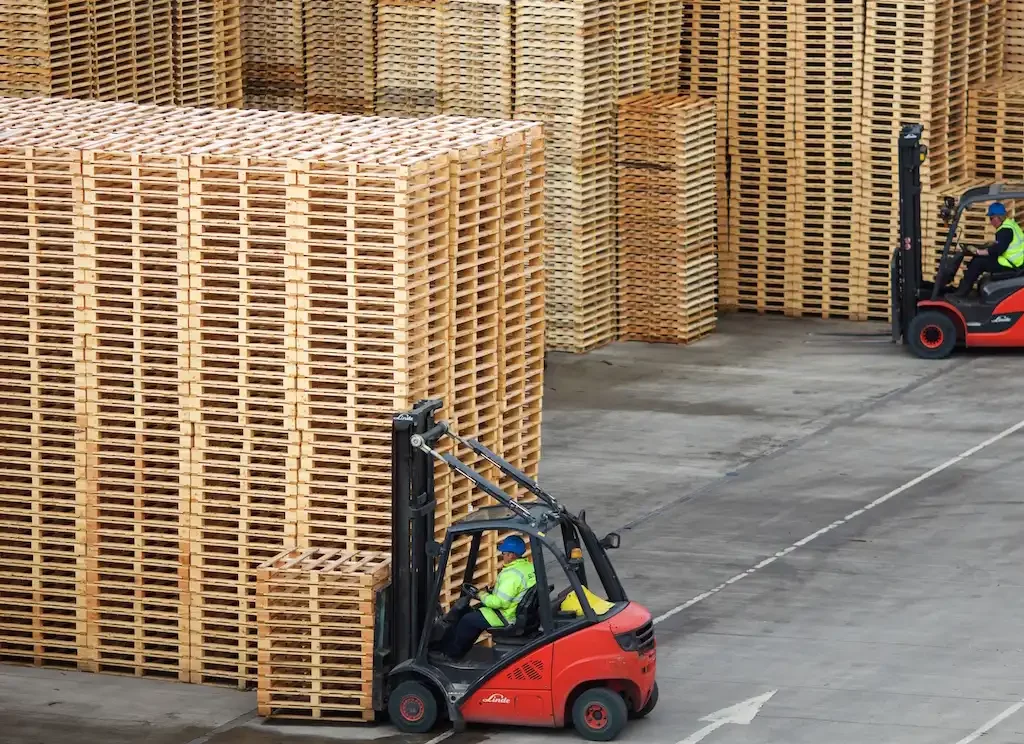
Forklifts are commonly used to move palletized loads.
The pallet’s entry configuration needs to accommodate the equipment being used.
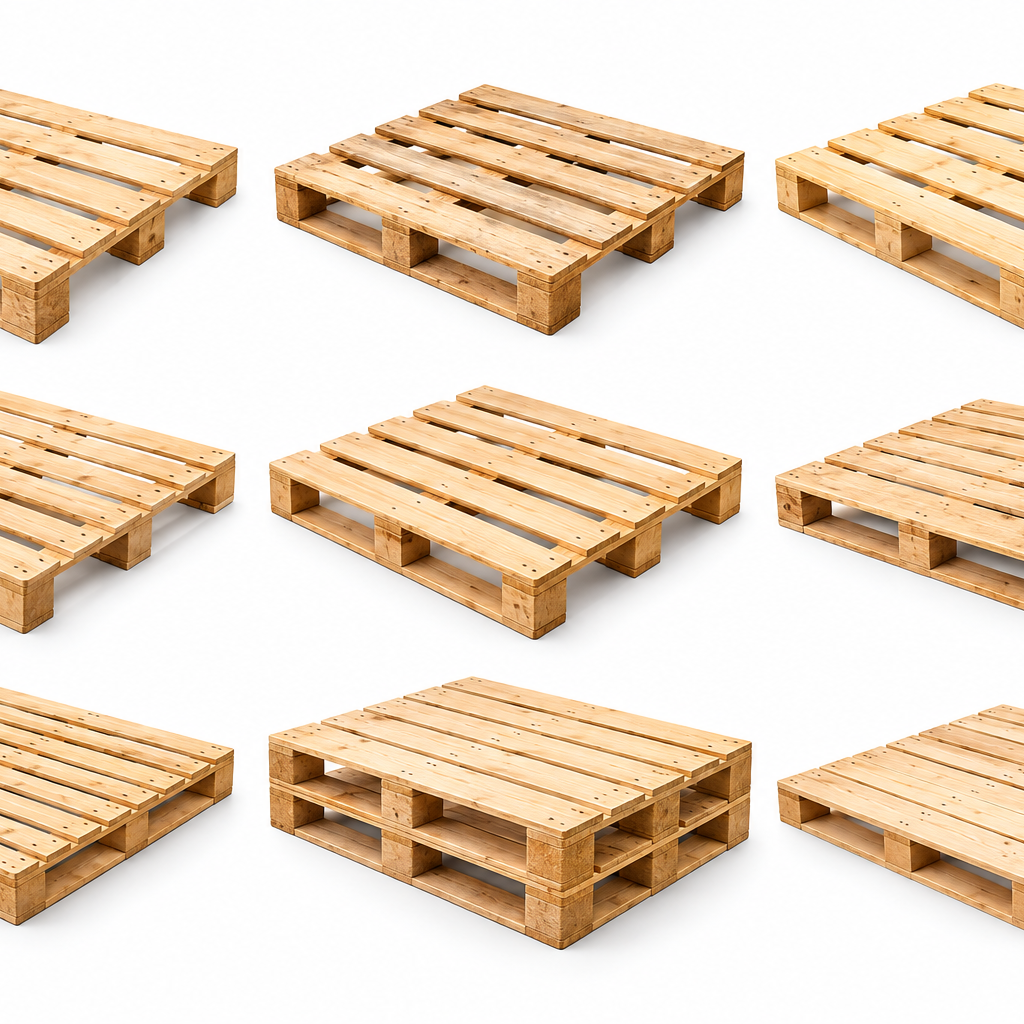
Two-way pallets allow forklift or pallet-jack entry from two directions, while four-way pallets provide additional entry options.
The appropriate design depends on the operation.
Pallets and Pallet Jacks
Pallet jacks are another common material-handling tool.
When pallets will be moved using pallet jacks, the pallet design should provide appropriate access for the equipment.
Businesses should communicate their handling requirements to the pallet manufacturer before ordering.
Pallets in Distribution
Distribution operations often move products through multiple stages before they reach their final destination.
A pallet can help maintain a consistent unit load during:
- Manufacturing
- Warehouse storage
- Order preparation
- Transportation
- Distribution
- Customer delivery
The pallet becomes part of the product’s logistics system rather than simply a platform for shipping.
Pallets and Warehouse Racking
Many warehouses use pallet racking to maximize available storage space.
The pallet must be suitable for the particular racking system.
Important considerations include:
- Pallet dimensions
- Load weight
- Pallet construction
- Rack configuration
- How the pallet is supported
Businesses should verify racking requirements before selecting or changing pallet designs.
Why Pallet Design Matters
Not all pallets are designed for the same application.
Pallet design can vary based on:
- Product weight
- Product dimensions
- Handling equipment
- Storage requirements
- Shipping requirements
- Expected reuse
- Export requirements
For example, a lightweight one-way shipment may require a different pallet design than a heavy industrial load that will be repeatedly handled.
Standard vs. Custom Pallets in Manufacturing
Manufacturers with consistent product dimensions may be able to use standard pallets.
Custom pallets may be beneficial when:
- Products have unusual dimensions
- Loads require additional support
- A specific machine or conveyor requires a certain footprint
- Products must fit a specialized shipping configuration
- Warehouse racking requires a particular pallet size
Custom pallet design allows the pallet to be built around the application.
Pallets for Different Industries
Wood pallets are used across many industries, including:
- Manufacturing
- Food and beverage
- Packaging
- Medical products
- Shipping
- Distribution
- Warehousing
- Industrial products
The specific pallet design depends on the product and handling environment.
Heat-Treated Pallets for International Shipping
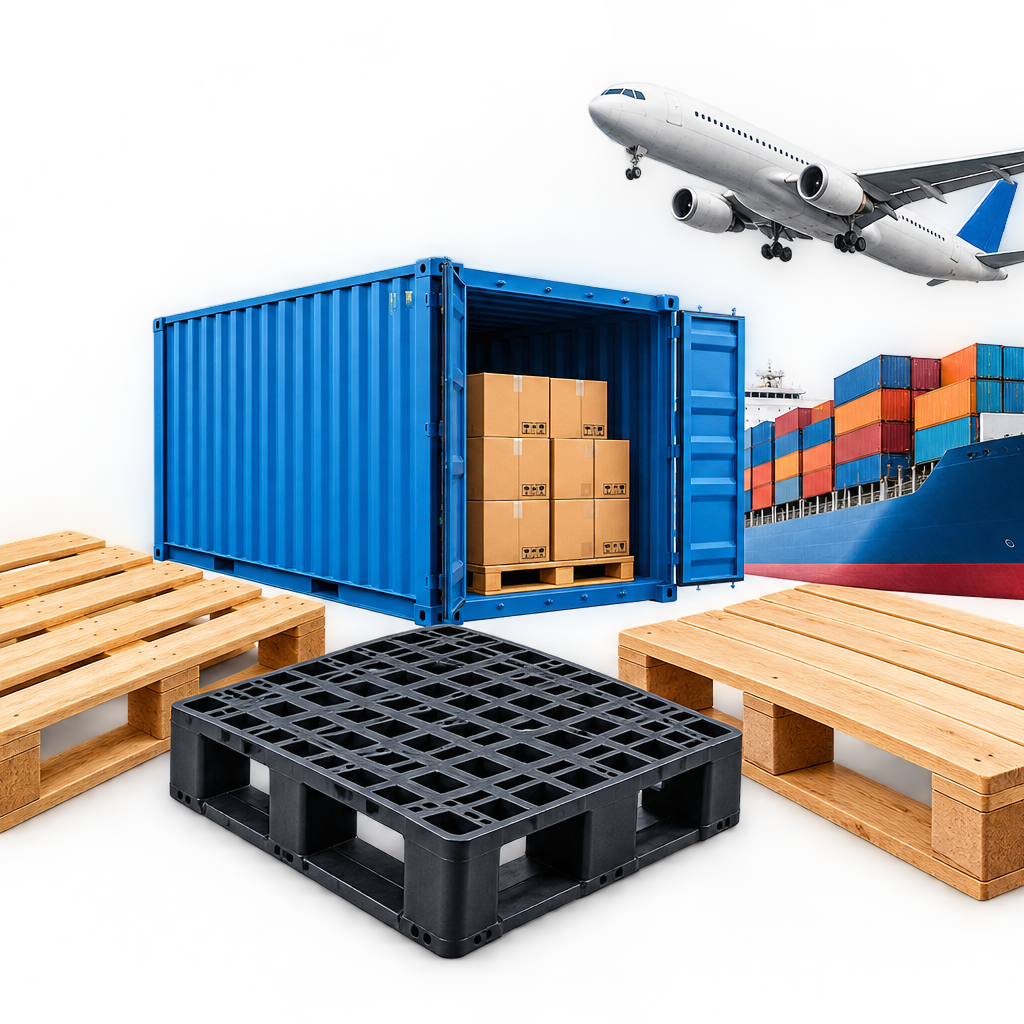
Businesses involved in international trade may require heat-treated pallets to meet applicable wood packaging requirements.
Heat treatment and ISPM-15 requirements should be considered when pallets are used for qualifying international shipments.
Viking Pallet for Manufacturing and Warehousing
Viking Pallet has manufactured wood pallets since 1969.
The company provides new wood pallets, custom pallet design, heat-treated pallets, and different pallet configurations for manufacturing, warehousing, shipping, and other applications.
Viking Pallet can manufacture pallets for both small and large lot sizes and works with customers to determine appropriate pallet specifications.
Frequently Asked Questions
Why are pallets important in warehousing?
Pallets provide a platform that allows products to be stored, moved, and transported using material-handling equipment.
Can pallets be used in warehouse racking?
Yes, but the pallet must be appropriate for the specific racking system, load, and storage application.
What type of pallet is best for manufacturing?
There is no single pallet design that is best for every manufacturer. The appropriate pallet depends on product size, weight, handling equipment, storage, shipping, and reuse requirements.
Are wooden pallets suitable for heavy products?
Yes. Wood pallets can be manufactured in heavy-duty configurations for appropriate applications.
Can manufacturing companies order custom pallets?
Yes. Custom pallets can be designed around specific product dimensions, weight, handling, and storage requirements.
Conclusion
Wood pallets play an important role in manufacturing and warehousing by creating practical platforms for storing, handling, and transporting products.
The right pallet depends on the complete application, including product dimensions, load weight, handling equipment, warehouse racking, transportation, and shipping requirements.
Viking Pallet provides standard, custom, and heat-treated wood pallet solutions for manufacturing, warehousing, shipping, and distribution applications.