
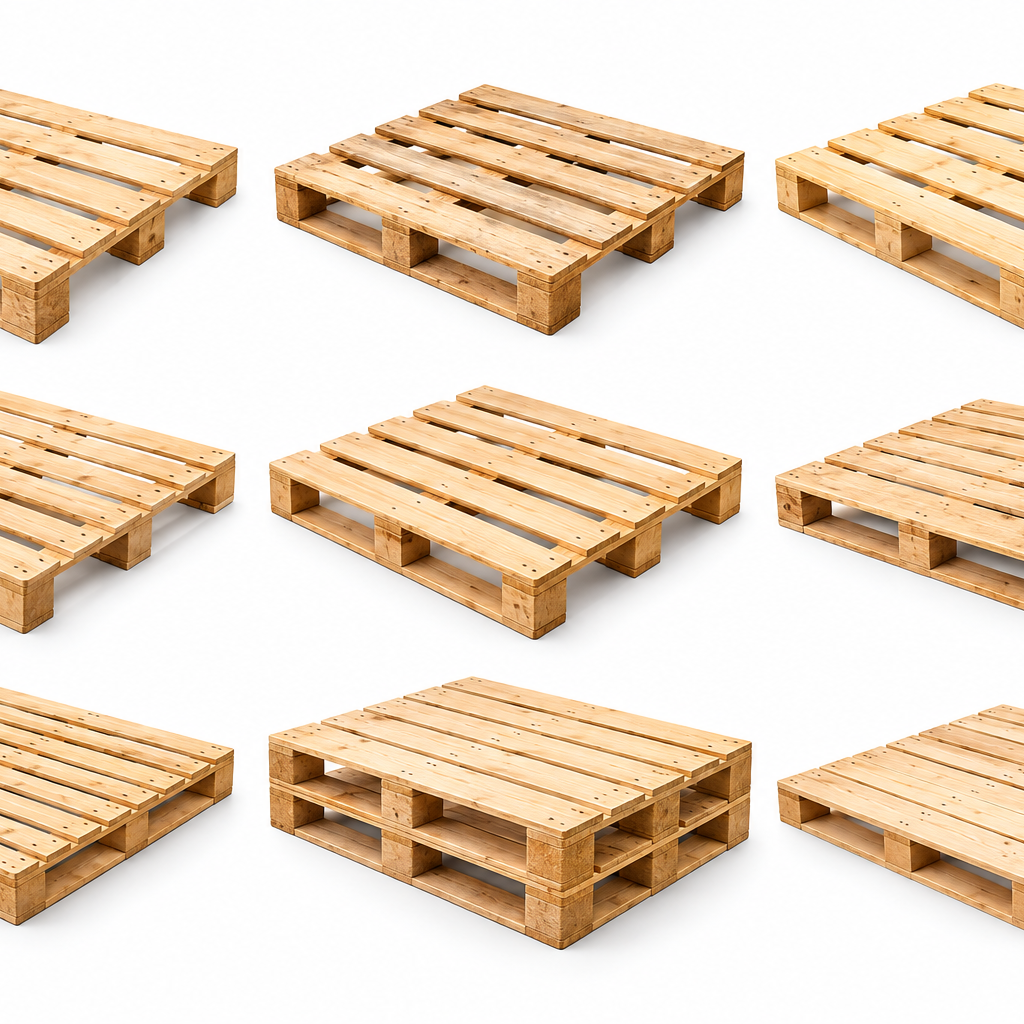
Wood pallets are available in many dimensions, but some pallet sizes are commonly used across shipping, warehousing, manufacturing, and distribution operations.
Choosing the right pallet size is important because the pallet needs to support the product while also working with forklifts, pallet jacks, warehouse racking, trucks, containers, and other handling systems.
What Is a Standard Wood Pallet Size?
A standard wood pallet size is a commonly used pallet dimension that fits established shipping and handling systems.
However, there is no single universal pallet size used for every industry.
Different industries and supply chains use different pallet dimensions based on their products and equipment.
In North America, the 48 × 40-inch pallet is one of the most widely used pallet sizes.
Other pallet dimensions may be appropriate depending on the application.
Common Wood Pallet Sizes
Some commonly encountered pallet dimensions include:
- 48 × 40 inches
- 42 × 42 inches
- 48 × 48 inches
- 36 × 36 inches
- 42 × 48 inches
- 40 × 48 inches
These are examples of commonly used dimensions, not a complete list of available pallet sizes.
The appropriate pallet size depends on the product and how the pallet will be handled.
Why Is 48 × 40 Inches So Common?
The 48 × 40-inch pallet is widely used in North American supply chains because it works well for many common products and transportation systems.
It can accommodate a wide variety of packaged goods while providing compatibility with common material-handling equipment.
However, businesses should not automatically select a 48 × 40-inch pallet simply because it is common.
A different size may provide better product support or shipping efficiency.
How Do You Choose the Right Pallet Size?
The correct pallet size should be based on the product rather than simply selecting the most common dimension.
Consider:
Product Dimensions
Measure the length and width of the product or packaged load.
The pallet should provide appropriate support without creating unnecessary overhang.
Product Weight
Weight affects pallet construction as well as pallet size.
A heavy load may require a stronger pallet design, additional deck boards, larger stringers, or other structural changes.
Handling Equipment
Determine whether the pallet will be moved using:
- Forklifts
- Pallet jacks
- Conveyors
- Automated warehouse equipment
The pallet should be compatible with the equipment used in the facility.
Warehouse Racking
If pallets will be stored in pallet racking, confirm the requirements of the racking system before selecting the pallet.
Transportation
Consider how the pallet will be loaded into:
- Trucks
- Trailers
- Shipping containers
- Warehouses
- Distribution centers
The pallet dimensions can affect how efficiently products are arranged during transportation.
Standard vs. Custom Pallet Sizes
Standard pallet dimensions can be a good choice when they fit the product and handling system.
Custom dimensions may be more appropriate when:
- The product is unusually sized
- The load requires specialized support
- A specific warehouse system must be accommodated
- Transportation requirements call for a particular footprint
- The customer needs a specific pallet configuration
A custom pallet does not necessarily mean an unusual or complicated design. It simply means the pallet is manufactured according to specified requirements.
Does Pallet Size Affect Shipping Costs?
Yes, pallet dimensions can affect how efficiently products fit within transportation space.
An appropriately sized pallet can help reduce unnecessary empty space and improve load organization.
However, shipping costs depend on many factors, including product dimensions, total shipment weight, carrier requirements, and transportation method.
What Information Should You Provide to a Pallet Manufacturer?
When requesting a pallet size, provide:
- Product length
- Product width
- Product height
- Product weight
- Packaging dimensions
- Number of units per pallet
- Handling equipment
- Racking requirements
- Shipping method
- Expected quantity
This allows the manufacturer to evaluate the application instead of simply recommending a generic pallet size.
Viking Pallet Standard and Custom Wood Pallets
Viking Pallet manufactures new wood pallets for a variety of industries and applications.
The company provides standard and custom pallet solutions and can manufacture pallets according to customer specifications.
When a standard size does not meet your requirements, custom pallet design can provide an alternative.
Frequently Asked Questions
What is the most common wood pallet size?
The 48 × 40-inch pallet is one of the most widely used pallet sizes in North America.
Are all wood pallets the same size?
No. Wood pallets are manufactured in many different dimensions depending on the application.
Can I order a pallet in a custom size?
Yes. Custom wood pallets can be manufactured according to product, handling, storage, and shipping requirements.
What pallet size is best for my product?
The best size depends on your product dimensions, weight, packaging, handling equipment, storage system, and transportation requirements.
Does pallet size affect warehouse storage?
Yes. Pallet dimensions can affect how products fit within warehouse racks and storage areas.
Conclusion
Standard wood pallet sizes provide convenient solutions for many shipping and warehouse applications, but the most common pallet size is not necessarily the best choice for every business.
The right pallet size should be selected based on the product, load, handling equipment, warehouse requirements, and transportation process.
Viking Pallet can provide standard and custom wood pallet solutions based on your specific requirements.